- Select State

- Drivers Ed

- Community


Car Insurance 101: Car Insurance for the First-Time Driver
Information & Resource Center
Types of Coverage
Next, you’ll need to decide what type of coverage is needed for a first-time driver. There are three common types of coverage:
Liability
Personal injury protection
Uninsured/Underinsured motorist
There are a few other types of coverage available, but many drivers have these three included in their auto insurance plan.
Liability Coverage
Liability coverage comes in two types: bodily injury and property damage.
Bodily injury liability coverage pays for the claims made against you if someone is injured or killed in an accident. There are usually separate types of bodily injury liability, one that provides coverage if a single person is hurt and another for if multiple people are hurt.
The other type of liability coverage you may be required to have is property damage liability coverage. It pays for damage to any property belonging to someone other than you.
Personal Injury Protection
Personal injury protection (PIP) is coverage to help you pay for any medical expenses, lost wages or other financial needs if you are injured in an accident.
Uninsured/Underinsured Motorist Coverage
Uninsured/Underinsured motorist coverage is only mandatory in a handful of states. It provides coverage in the event you are injured in a hit-and-run accident or in a collision with a driver who either has no insurance or not enough insurance to cover all the damages.
Know the Minimum Coverage Mandates
Getting auto insurance isn’t an option. It’s mandatory in 48 states. Only Virginia and New Hampshire have no auto insurance requirementsStates With No Car Insurance Requirements 4121731. However, that doesn’t mean uninsured drivers are off the hook. The at-fault driver is still liable for bodily injury and property damage even if they have no insurance.
Auto insurance requirements vary from state to state. You should be able to find out what’s mandatory at your state’s Department of Transportation website.
Deciphering Minimum Coverage Amounts
When you look up your state’s car insurance requirements you’ll quickly notice that the type of coverage isn’t the only thing specified. Most states set minimum coverage amounts as well.
You will often see auto insurance coverage amounts represented by three numbers. For example, in California, you may see it represented as 15/30/5. This is because the required coverage in that state is $15,000 for bodily injury of one person, $30,000 for bodily injury of more than one person and $5,000 for property damage.
Keep in mind the required amounts are the bare minimum. It’s best practice to get as much as coverage as you can. A serious accident can result in hundreds of thousands of dollars in damage, and the driver is responsible for anything that isn’t covered by insurance.
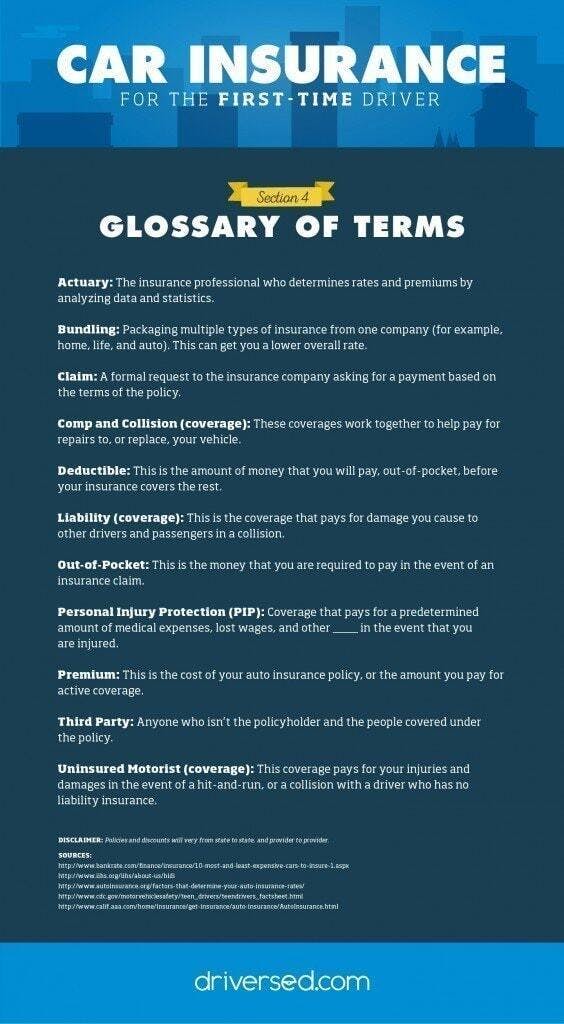
Car Insurance 101 Glossary
Comparing auto insurance plans is much easier when you know what everything means. There are a lot of terms you’ll need to be familiar with in order to be well informed when purchasing car insurance.
We put together the auto insurance glossary below to help new drivers get a handle on all the industry jargon and understand potential insurance discountsSave Money On Car Insurance.
That’s it! Now that you’ve got the basics of auto insurance down we’ll go over how choosing the right vehicleTrending Buying Your First Car A Guide For Teens And Everyone Else Driversed.com can be a benefit when purchasing auto insurance for a first-time driver.
Want to learn more? Check out our Car Insurance Resource CenterCar Insurance Driversed.com and compare free quotes from top-rated companies with Answer Financial.
*This article was updated on 4/24/20
Looking for more driving resources?
Enter your email for deals, study materials, car maintenance tips, insurance savings, and more.