- Select State

- Drivers Ed

- Community


Drowsy Driving: Don’t Be a Victim
How are you feeling today? Are you buzzing with energy after eight hours of deep, uninterrupted sleep? Or are you holding on to your coffee cup for dear life, struggling to keep your eyes open?
If you’re feeling sleepy, you’re not alone. According to 2020 survey results published by the National Sleep FoundationSleep In America Polls, 44% of Americans feel sleepy 2-4 days a week, and 28% feel sleepy 5-7 days a week! If you got an incredible eight hours of sleep last night, you’re in the minority (but also, what’s your secret?!)
For the rest of us, March 13 through March 19 is Sleep Awareness Week 2022#:~:text=Join%20us%20from%20March%2013 The%20importance%20of%20sleep%20health. Sleep Awareness Week. This week highlights the importance of getting sufficient sleep to live healthy, safe, and productive lives. And while we hope you check out some tips on getting better sleepAbout Index.html Sleep, we also want to call out one of the most dangerous aspects of this lack of sleep: drowsy driving.
What Is Drowsy Driving?
According to the CDCWork Hour Training For Nurses Longhours Mod11 02.html Niosh, drowsy driving occurs when someone operates a vehicle while feeling sleepy or tired. Some warning signs of drowsy driving include:
An inability to focus
Frequent yawning
Drifting between lanes
In addition, certain factors could put you at a higher risk of drowsy driving. Things like:
Suffering from insomnia, or sleep deprivation (getting less than 6 hours of daily sleep)
Driving long distances (more than 2 hours at a time) without stopping for a rest break
Driving during off-hours (overnight or mid-afternoon)
Taking sedating medications (antidepressants, cold medicine, antihistamines)
Working more than 60 hours a week
Drinking even small amounts of alcohol
If any of these sounds like you, you may be in the danger zone.
Why Is Drowsy Driving Dangerous?
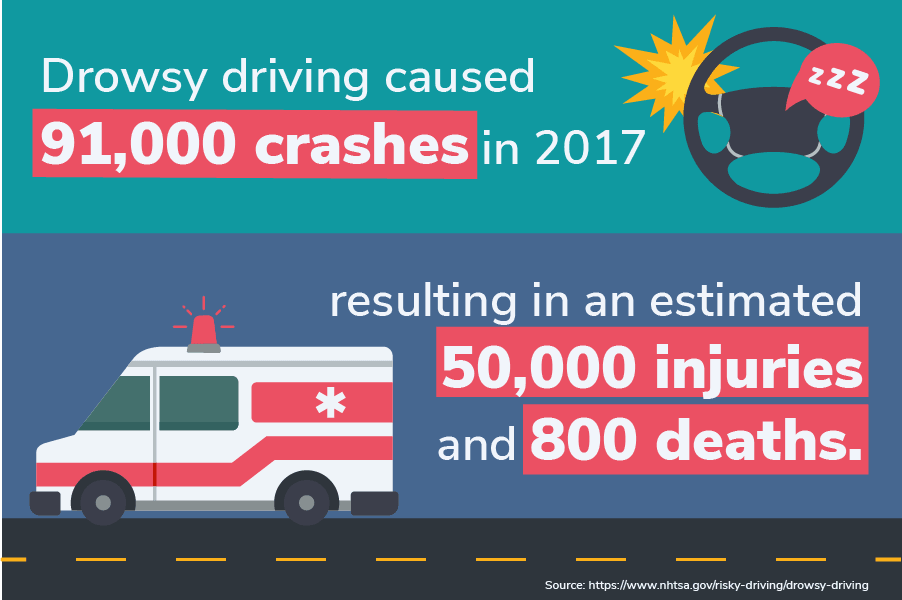
Sleeplessness while behind the wheel can have fatal consequences. Numerous studies have found that sleep deprivation can affect driving as much as (and sometimes more than) alcohol. The Sleep Foundation has published statistics on the effectsDrowsy Driving Vs Drunk Driving#:~:text=After%2020%20hours%20of%20being Blood%20alcohol%20content%20of%200.1%25. Drowsy Driving of sleep-deprived driving and drunk driving, including that driving after being awake for 20 hours has the same effect on the human body as having a blood-alcohol concentration of 0.08%.
The National Highway Traffic Safety Administration estimated that drowsy driving caused 91,000 crashesDrowsy Driving Risky Driving in 2017, resulting in an estimated 50,000 people being injured and 800 deaths. Getting precise numbers on drowsy driving-related crashes is difficult, however, and the death toll may be even higher. According to the National Sleep FoundationDrowsy Driving Prevention, drowsy driving kills more than 6,400 Americans annually.
What Should I Do if I Get Drowsy While Driving?
Unfortunately, there is no remedy for sleepiness aside from actually getting some sleep (at least seven hours), but there are some things that you can do to reduce your risk of drowsy driving:
Avoid traveling at times that you would usually be sleeping
Before you drive, check yourself to determine whether you're ready to get behind the wheelTrending Just How Much Do Distraction Emotion And Other Unsafe Behaviors Impact Driving Risk Driversed.com
Schedule a break every 2 hours, or 100 miles
Avoid heavy and rich foods before and during a trip
For long distances, travel with a companion and take turns driving
Avoid medications that cause drowsiness or other impairment
And, finally, if you ever do find yourself getting sleepy at the wheel, the best thing to do is pull over to a safe area (like a rest stop) and take a 15-20 minute nap.
Now that you know the risks, please avoid drowsy driving, try to make sleep a priority, and above all be safe out there!
Looking for more driving tips? Check out our blogTrending Driversed.com for the latest driving information.
Take your Traffic School or Defensive Driving Course Online Today!
Looking for more driving resources?
Enter your email for deals, study materials, car maintenance tips, insurance savings, and more.